


Purple cane tomato
About the product
Large, flattened, and meaty tomato. It stands out for its intense red color with purplish shoulders and a perfect balance between sweetness and natural acidity. The Caña Morada Tomato is a gastronomic treasure of Tenerife, specifically linked to the agricultural history of Granadilla de Abona. This "ancient" variety has survived thanks to the efforts of local farmers who have preserved their seeds in the face of more uniform commercial varieties. The Caña Morada Tomato is much more than just a vegetable; it is a gastronomic treasure of Tenerife, specifically linked to the agricultural history of Granadilla de Abona. This "ancient" variety has survived thanks to the efforts of local farmers who have preserved their seeds in the face of more uniform commercial varieties.
Origin
An heirloom variety from Granadilla de Abona, preserved by local farmers. It is a symbol of Tenerife's agricultural heritage and biodiversity. The success of this tomato lies in its symbiosis with the Granadilla environment: The Terroir: It benefits from the volcanic soils and climate of southern Tenerife, where sunshine is abundant but trade winds keep the plant cool. "Cane" Training Technique: It is called "cane" because it requires supports (traditionally canes) to grow vertically, as it is an indeterminate growth habit that can reach a considerable height. Resilience: It is a hardy variety, adapted to the specific conditions of the area, although its yield per plant is usually lower than that of modern hybrids, which explains its slightly higher price and exclusivity.
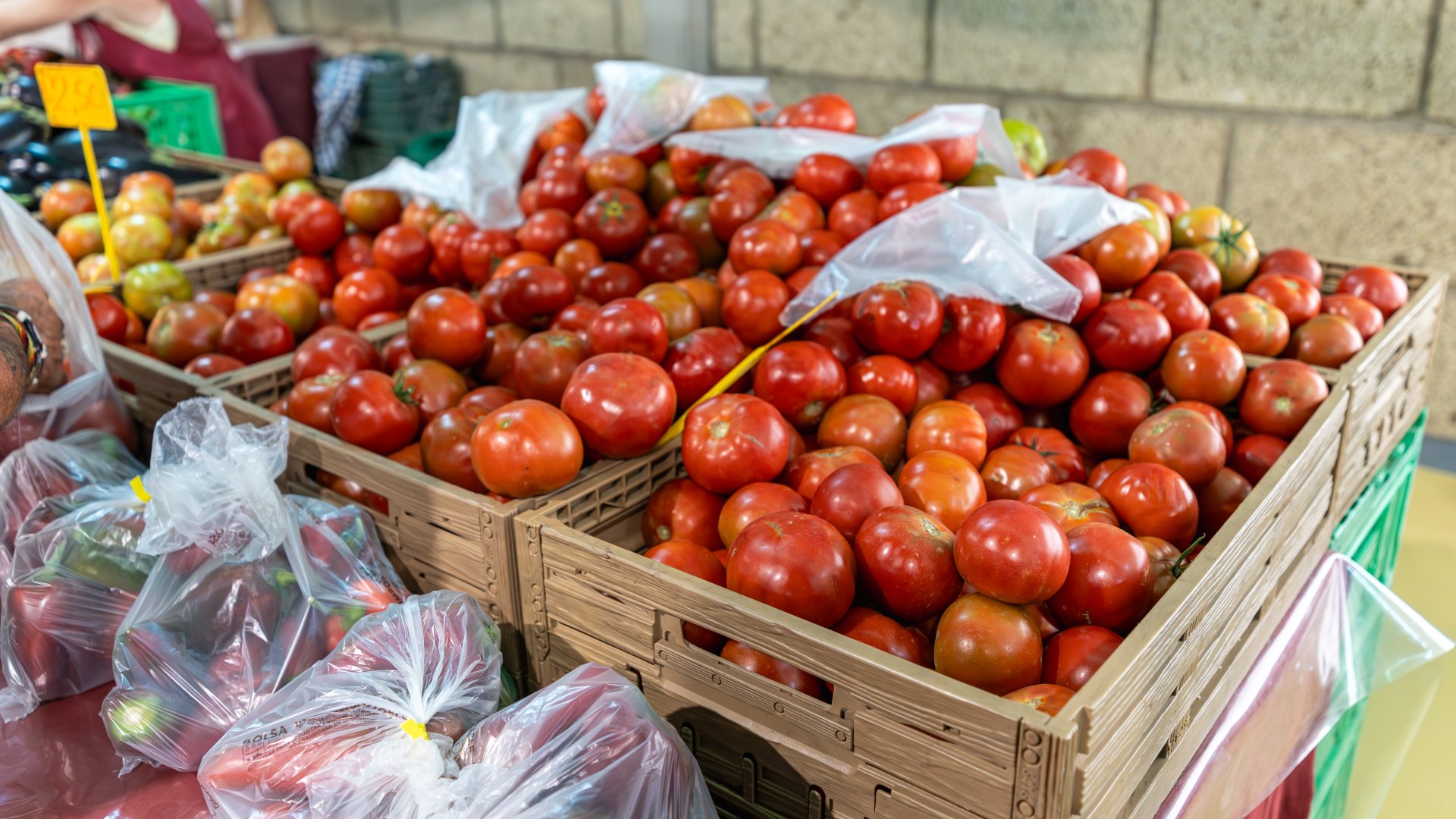
-
Culinary uses
Ideal in salads with salt and oil to highlight its freshness. Its mellow texture and thin skin make it the undisputed king of traditional Canarian recipes. Balanced flavor: It has a perfect balance between sweetness and acidity, with a deep, lingering aftertaste reminiscent of old-fashioned tomatoes. Meaty texture: It has a lot of pulp and few seeds compared to other varieties. Its texture is mellow, melting in the mouth without being mealy. Aroma: When cut, it releases an intense, herbaceous aroma, very characteristic of the traditional dryland or irrigated crops of the island's south.
Where to find it
Producers who make it and restaurants that use it.